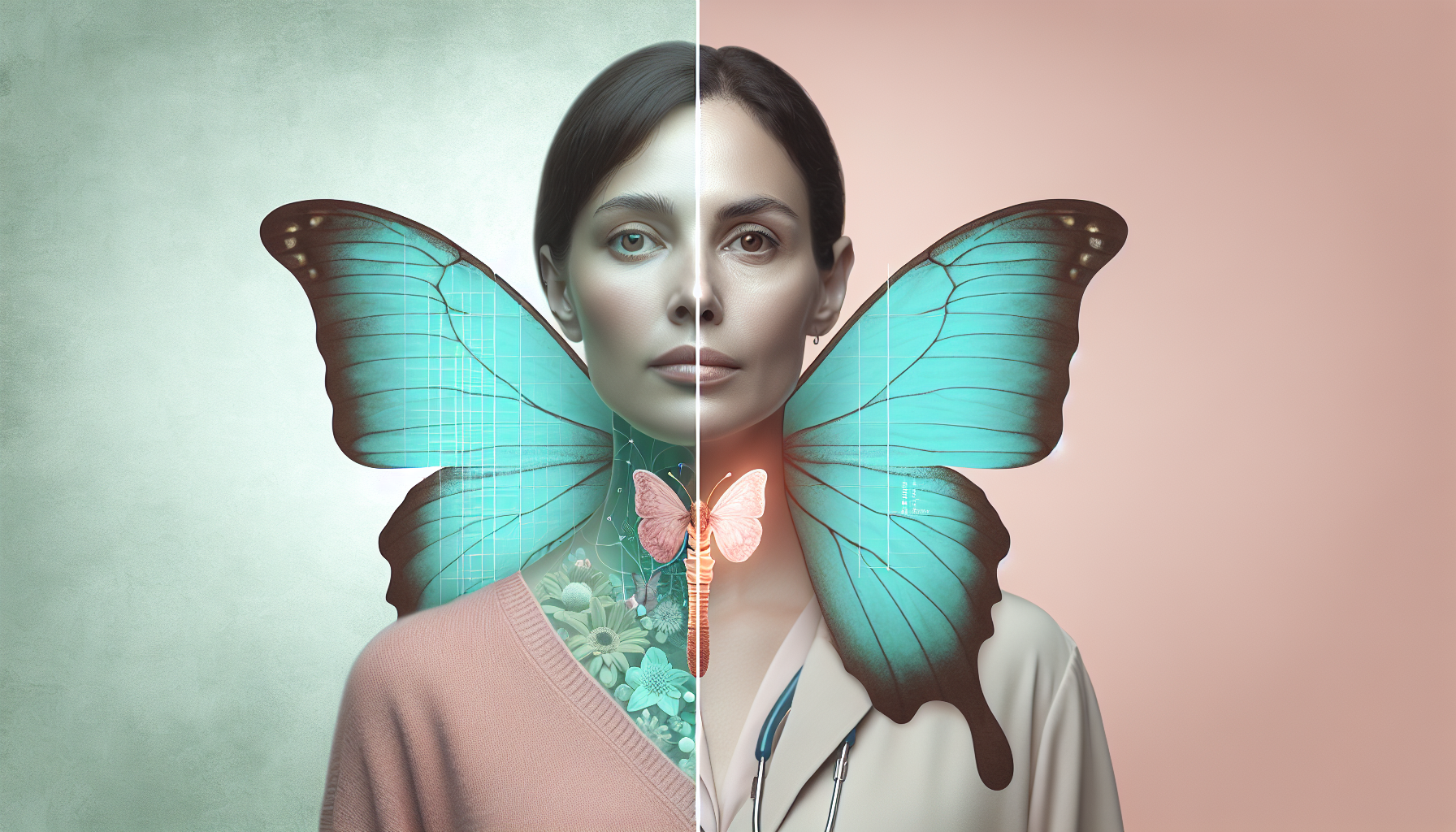
You're exhausted. You're gaining weight without changing anything. Your brain feels foggy, your sleep is broken, and your mood is all over the place. You've mentioned it to your doctor, maybe more than once. And you've been told it's probably just stress — or just your age. But something doesn't feel right.
If you're a woman in your 40s or 50s, there are two very common conditions that could explain how you're feeling: perimenopause and hypothyroidism (an underactive thyroid). The reason this gets so confusing is that hypothyroidism vs perimenopause symptoms are almost identical. They overlap so completely that even experienced doctors frequently mistake one for the other — or miss that both are present at the same time.
This article will help you understand what each condition involves, why their symptoms are so similar, and what to do if you think you might be dealing with one or both.
What is perimenopause?
Perimenopause is the transitional phase that leads up to menopause — the point when your periods stop entirely. It's driven by a gradual decline in oestrogen and progesterone, the hormones produced by your ovaries. What surprises many women is how early it can begin. While the average age of menopause in the UK is 51, perimenopause can start as early as your late 30s. For most women it lasts between four and ten years — meaning you could be navigating this transition for a significant portion of your 40s.
The symptoms of perimenopause are wide-ranging because oestrogen doesn't just affect your reproductive system. It plays a role in brain function, bone density, cardiovascular health, sleep regulation, metabolism, and mood. When levels begin to fluctuate and fall, the effects are felt throughout the whole body.
Common perimenopause symptoms include:
- Irregular periods (heavier, lighter, closer together or further apart)
- Hot flushes and night sweats
- Disrupted sleep
- Fatigue and low energy
- Weight gain, particularly around the middle
- Brain fog and difficulty concentrating
- Low mood, anxiety, or irritability
- Joint aches and pains
- Changes in libido
- Hair thinning or changes in skin texture
- Bladder changes, including leaking when you cough or sneeze
What is hypothyroidism?
Your thyroid is a small butterfly-shaped gland at the base of your throat. Despite its size, it has an enormous job: it produces hormones that regulate your metabolism, energy levels, body temperature, heart rate, digestion, mood, and much more. Hypothyroidism — sometimes called an underactive thyroid — is when the thyroid doesn't produce enough of these hormones. It's significantly more common in women than in men, and the risk increases with age. In the UK, it's estimated that around one in 20 women have some degree of thyroid dysfunction.
The most common cause of hypothyroidism is an autoimmune condition called Hashimoto's thyroiditis, where the immune system gradually attacks thyroid tissue. This can develop slowly over years, which is why symptoms often creep up gradually rather than appearing suddenly.
Common hypothyroidism symptoms include:
- Persistent fatigue and low energy
- Weight gain, even without dietary changes
- Feeling cold when others don't
- Brain fog and slow thinking
- Low mood or depression
- Constipation or sluggish digestion
- Dry skin and hair
- Hair loss or thinning
- Disrupted or unrefreshing sleep
- Muscle weakness or aching joints
- Low libido
Why hypothyroidism and perimenopause symptoms overlap so completely
The overlap between hypothyroidism vs perimenopause symptoms isn't a coincidence. There are genuine biological reasons why these two conditions feel so similar — and why they often occur together.
Oestrogen and thyroid hormone interact closely. Oestrogen affects the way your body produces and responds to thyroid hormone. As oestrogen levels fall during perimenopause, thyroid function can be disrupted — meaning perimenopause itself can unmask a thyroid problem that was previously manageable.
Both affect metabolism. Thyroid hormone and oestrogen both play a role in how your body converts food to energy. When either is low, the result is the same: fatigue, weight gain, feeling slow.
Both affect the brain. Low oestrogen and low thyroid hormone both impair cognitive function — which is why brain fog is one of the most reported symptoms in both conditions, and one of the most distressing.
Hashimoto's is more common in women going through hormonal transitions. Research suggests that the immune changes associated with perimenopause can trigger or accelerate autoimmune thyroid conditions. Many women are diagnosed with Hashimoto's in their 40s — right in the middle of perimenopause.
Doctors often test for one and not the other. If a woman in her mid-40s goes to her GP with fatigue and weight gain, she may be told it's perimenopause without any thyroid testing — or she may be given a thyroid test that comes back “normal” but misses the fuller picture.
Key differences to be aware of
While the symptoms overlap significantly, there are a few signs that might point more toward one condition than the other.
Signs that lean more toward hypothyroidism:
- Feeling cold all the time, even in warm environments
- Constipation or noticeably slow digestion
- Very dry skin and brittle nails
- A slow heart rate
- Noticeable puffiness, particularly around the face and eyes
- Symptoms that are consistent rather than coming and going
Signs that lean more toward perimenopause:
- Irregular periods or changes in your cycle
- Hot flushes or night sweats
- Symptoms that fluctuate — good days and bad days, often linked to your cycle
- Vaginal dryness
- Bladder changes
It's worth knowing that these aren't mutually exclusive. Many women in their 40s are experiencing both — and getting clarity on which is which requires testing, not guessing.
What to do if you think this applies to you
The single most important thing you can do is ask for the right tests. When you speak to your GP, ask for: a full thyroid panel — ideally TSH, Free T4, and Free T3; thyroid antibodies (TPO antibodies) to check for Hashimoto's; and a conversation about perimenopause symptoms and whether hormone testing is appropriate for your situation.
Keep a symptom diary before your appointment. Note when symptoms are worse, whether they relate to your cycle, and how long you've been experiencing them. If you feel dismissed, it is completely reasonable to ask again, seek a second opinion, or request a referral to an endocrinologist or menopause specialist.
A gentle note on supporting your body in the meantime
While you're seeking answers, there are things you can do to support your overall hormone health. Prioritising sleep, reducing stress where possible, eating to support stable blood sugar, and being gentle with yourself through what can be a genuinely difficult time all matter.
Some women find targeted nutritional support helpful alongside — not instead of — medical guidance. Thyrafemme Balance is a supplement formulated specifically for women navigating the thyroid-perimenopause crossover, combining key nutrients that support both thyroid function and hormone balance. If you're looking for additional support while working through the process of getting answers, it may be worth exploring. You can read more about it here: https://0e4c2euno7fnnc0oqly0kbz6ga.hop.clickbank.net
As always, speak to your GP before starting any new supplement, particularly if you are already on thyroid medication.
When to seek further help
If you are experiencing significant fatigue, unexplained weight gain, persistent low mood, or any symptoms that are affecting your quality of life — please don't wait and hope they pass. These are real symptoms that deserve proper investigation. Ask your GP for a full thyroid panel and an honest conversation about perimenopause. If you don't feel heard, advocate for yourself — you know your body better than anyone.
This article is for informational purposes only and does not constitute medical advice. Always consult a qualified healthcare professional for guidance on your personal health.
Affiliate disclosure: This article contains affiliate links. If you purchase a product through our links, we may earn a small commission at no extra cost to you. We only recommend products we believe offer genuine value to women navigating hormone health after 40.